Encyclopedia
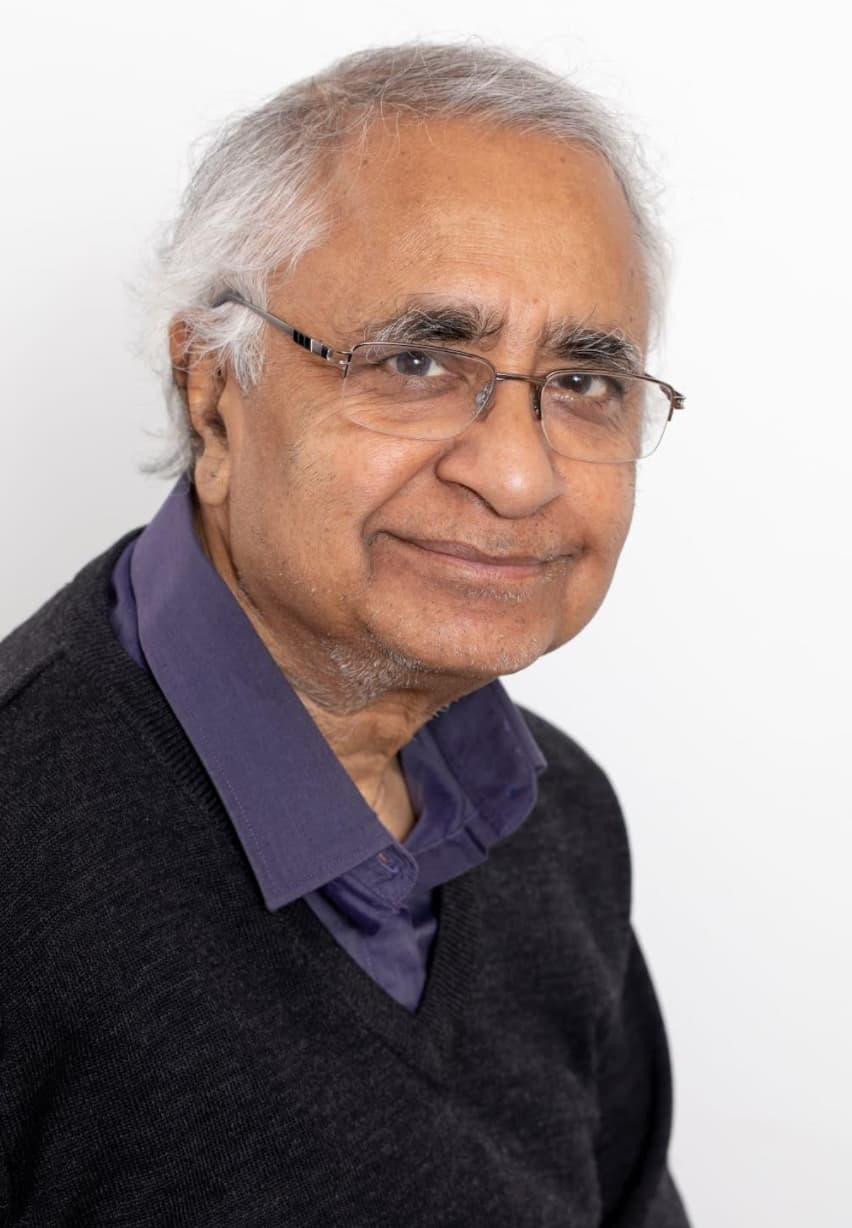
Ranjan Ray
Professor of Economics, Monash University
Ranjan Ray, who is based in Australia, specialises in Development Economics, Public Economics, and Applied Welfare Economics.
He is currently Professor of Economics at Monash University in Melbourne.
Ranjan Ray is on the editorial board of the Review of Income and Wealth (journal of the International Association for Research in Income and Wealth) and Economic Record (journal of the Economic Society of Australia).
He has taught courses on public finance and the economics of developing countries.
His research topics include optimal taxation, the measurement of poverty and inequality, public policy for child and family welfare, dietary habits in developing countries, and fiscal federalism & resource transfers.
You can find his book, Household Behaviour, Prices, and Welfare here (https://www.amazon.co.uk/Household-Behaviour-Prices-Welfare-Collection/dp/9811319294).
Born: Kolkata, India.
Doctoral Dissertation: Utility Maximisation and Consumer Demand with an Application to the United Kingdom 1900-70.
Doctoral Superviser: John Denis Sargan.
Subjects Taught:
Econometric Theory, Applied Econometrics, Public Economics, Microeconomics, Statistical Techniques in Development Planning, Mathematical Methods for Economists, Issues in Development Economics.
- Education
- PhD Economics, London School of Economics · MA Economics, Delhi School of Economics, University of Delhi · BA Economics, Presidency College, University of Calcutta
- Topics
- Development Economics · Health Economics · Optimal Taxation · The Measurement of Poverty and Inequality · Child & Family Welfare in Developing Countries · Dietary Habits in Developing Countries · Fiscal Federalism & Resource Transfers · Estimation of Spatial Prices and Purchasing Power Parities
In the Encyclopedia0
Talks & video4
Selected publications178
- 2021(with A. Majumder and S. Santra), “Should commodity tax rates be uniform across regions in a heterogeneous country? Evidence from India”, forthcoming inJournal of PolicyModelling, 2021.
- 2021(with P. Singh), “Regionally disaggregated estimates of global income inequality with evidence on sensitivity to purchasing power parity”, forthcoming inJournal of theAsia Pacific Economy, 2021.
- 2021(with S. Kumar), “COVID-19: facts, figures, estimated relationships and analysis”,forthcoming inIndian Economic Review, 2021.
- 2020(with A. Majumder), “National and subnational purchasing power parity: a review”. Decision, 2020, 47, 103-124.
- 2020(with A. Majumder and S. Santra), “The spatial price map of India drawn using pseudo unit values”,Indian Growth and Development Review,2020,13(3), 537-560.
- 2020“Pollution from coal-based power units and anaemic status of children and women”,https://www.ideasforindia.in/topics/human-development/pollution-from-coal-based-power-units-and-anaemic-status-of-children-and-women.html,Posted on 2December, 2020.
- 2019(with A. Nicholas and K. Sinha), “Differentiating between Dimensionality and Duration in Multidimensional Measures of Poverty: Methodology with Application to China”,Review of Income and Wealth, 2019, 65 (1), 48-74.
- 2019(with K. Sinha), “Food Consumption, Calorie intake and undernourishment in India: the recent evidence on role of welfare schemes”, (2019) in Disease, human Health, and Regional Growth and Development in Asia. Batabyal, A. A., Higano, Y. & Nijkamp,P. (eds.).1st ed.Singapore, Springer, p. 21-46.(New frontiers in Regional Science:Asian Perspectives; vol. 38).
- 2018(with A. Majumder and S. Santra), “Sensitivity of Global and Regional Poverty Rates toAlternative Purchasing Power Parities’,Indian Growth and Development Review,2018, 11, 34-56.
- 2018(with M. Chakrabarty and A. Majumder), “A Framework for the Simultaneous Measurement of Spatial Variation and Temporal Movement in Prices in aHeterogeneous Country: the Dynamic Household Regional Product Dummy Model”, Review of Income and Wealth, 2018, 64, 203-230.
- 2018(with S. Ahmed), “Do In Utero Shocks Have Adverse Effects on Child Health Outcomes and Can Welfare Schemes Ameliorate Such Effects? Evidence from Andhra Pradesh, India”, Journal of Biosocial Science, 2018, 50, 770-799.
- 2018(with Ankita Mishra and Leonora Risse), “A Multidimensional Dynamic Measure of Child Disadvantage:A Methodological Tool for Policymakers”,Social IndicatorsResearch, 2018, 139, 1187-1218.
- 2018(with Ankita Mishra and Leonora Risse), “How Does Child Disadvantage Change with Age? An Analysis of Australian Children”,Journal of Human Development and Capabilities, 2018, 19, 477-498.
- 2018Ray, R. (2018), Household Behaviour, Prices, and Welfare:A Collection of Essays Including Selected Empirical Studies, published by Springer in its new series, Themes in Economics: Theory, Empirics and Policy(this book was published in October, 2018).
- 2018‘Child Health, Fertility and Sex Ratio: India vs Bangladesh’,https://www.ideasforindia.in/topics/human-development/child-health-fertility-and-sex-ratio-india-vs-bangaldesh.html. Posted on 22 November, 2018.
- 2018‘Enhancing nutrition among the poor: UBI vs. welfare programmes’,https://www.ideasforindia.in/topics/poverty-inequality/enhancing-nutrition-among-the-poor-ubi-vs-welfare-programmes.html. Posted on 28 May,2018.
- 2017(with A. Majumder),“Estimates of Spatial Prices in India and their Sensitivity to Alternative Estimation Methods and Choice of Items",Social Indicators Research,2017,131, 145-167.
- 2017(with A. Majumder and S. Santra), “The World Bank’s Poverty Enumeration: How Transparent is the Process, how Sound is the Methodology and how Reliable are theNumbers?",Economic and Political Weekly, 2017, June 17, 43-52.
- 2017“The Role of Prices in Welfare Comparisons: Methodological Developments and aSelective Survey of the Empirical Literature”,Economic Record, 2017,93 (301),314-332.
- 2017(with A. Majumder and S. Santra), “Sensitivity of Purchasing Power Parity Estimates toEstimation Procedures and their effect on Living Standards Comparisons”, Journal of Globalization and Development, 2017, 8, 1-25.
- 2017“The Link between Preferences, Prices, Inequality and Poverty: The Indian Evidence”, Ch.7 in Markets, Governance and Institutions in the Process of Economic Development, edited by Ajit Mishra and Tridip Ray, OUP, Delhi, 2017.
- 2016(with A.Majumder and K.Sinha), “A Unified Framework for the Estimation of Intra and Inter Country Food Purchasing Power Parities: India, Indonesia and Vietnam”,IndianGrowth and Development Review, 2016, 9(1), 2-31.
- 2016“India’s Economic Performance in the Post-Reforms Period-a Tale of Mixed Messages”in Globalisation and Challenges of Development in Contemporary India, edited by Sita Venkateswar and Sekhar Bandyopadhyay, Springer, 2016.
- 2016‘Quality of governance and welfare outcomes’,http://www.ideasforindia.in/article.aspx?article_id=1619, Posted on 27 April, 2016.
- 2015(with A.Majumder and K.Sinha), "Estimating Purchasing Power Parities from HouseholdExpenditure Data Using Complete Demand Systems with Application to LivingStandardsComparison:India and Vietnam",Reviewof Income and Wealth:2015,61(2), 302-328.
- 2015(with A.Majumder and K. Sinha), “Spatial Comparisons of Prices and Expenditure in aHeterogeneousCountry: Methodology with Application to India”,MacroeconomicDynamics:2015, 19, 931-989.
- 2015(with K.Sinha), “Multidimensional deprivation in China, India and Vietnam: AComparativeStudy on Micro Data’,Journal of Human Development andCapabilities:2015,16(1), 69-93.
- 2015(with M. Chakrabarty and A.Majumder), “Preferences, Spatial Prices and Inequality”,Journal of Development Studies, 2015, 15 (11), 1488-1501.
- 2015‘Why the World Bank’s International Comparison Program has limited use forIndia’,http://www.ideasforindia.in/Article.aspx?article_id=415.Posted on 20 Feb,2015
- 2014(with S.Ahmed), “Determinants of Pregnancy, Induced and Spontaneous Abortion in aJointly Determined Framework: Evidence from a Country wide District LevelHousehold Survey in India”,Journal of Biosocial Science, 2014, 46, 480-517.
- 2014(with I.Chatterjee), “Crime, Corruption and the Role of Institutions”,Indian Growth andDevelopment Review, 2014,7, 73-95.
- 2014(with A.Mishra), “Spatial Variation in Prices and Expenditure Inequalities inAustralia”,Economic Record, 2014, 90, 137-159.
- 2014(with S. Ahmed), “Health Consequences of Child Labour in Bangladesh”,DemographicResearch, 2014, 30, 111-150.
- 2014“International Comparison Program of the World Bank: How Meaningful Is the Exercise for India?”Economic and Political Weekly, 2014, Aug. 30, 70-75.
- 2014(withK. Sinha),“Rangarajan Committee Report on Poverty: Another Lost Opportunity”,Economic and Political Weekly, 2014, Aug. 9, 43-48.
- 2014‘A critical assessment of the Rangarajan Panel Report on poverty measurement’,http://www.ideasforindia.in/Article.aspx?article_id=365. Posted on 30 Oct, 2014.
- 2014‘Going beyond the Gujarat versus rest of India debate on growth rates’,http://www.ideasforindia.in/Article.aspx?article_id=286. Posted on 7 May, 2014.
- 2013(with P.Maitra, A.Rammohan and MC Robitaille), “Food consumption patterns and malnourished Indian children: Is there a link?”,Food Policy, 2013, 38, 70-81.
- 2013(with A.Mishra), "Multi-Dimensional Deprivation in India during and after the Reforms:Do the Household Expenditure and the Family Health Surveys Present ConsistentEvidence",Social Indicators Research,2013,110. 791-818.
- 2013(with A.Majumder and K.Sinha), "Temporal Comparisons of Prices, Expenditure and Growth in India: A State-wise Analysis”,Indian Growth and Development Review,2013, 6(2), 195-211.
- 2013(with P.Maitra), “Child Health, Maternal Health and Infant Mortality in West Bengal and Comparison with other Regions in India”,Economic and Political Weekly, 2013, Dec.7,50-58.
- 2013‘Economic growth versus social development: The spatial dimension’,http://www.ideasforindia.in/Article.aspx?article_id=172. Posted on 31 July, 2013.
- 2012(with K. Sinha), "Interaction between HIV awareness, knowledge, safe sex practice and HIV incidence: evidence from Botswana", Journal of Biosocial Science, 2012,44,321-344.
- 2012(with A. Nicholas), "Duration and Persistence in Multidimensional Deprivation:Methodology and Australian Application", Economic Record, 2012, 88 (280), 106-126.
- 2012(with A. Mishra), "Multi-Dimensional Deprivation in the Awakening Giants: A Comparison of China and India on Micro Data", Journal of Asian Economics,2012,23,454-465.
- 2012(with I. Chatterjee), "Does the Evidence on Corruption Depend on how it is measured? Results from a Cross Country Study on Micro Data sets", Applied Economics, 2012,44(25), 3215-3227.
- 2012(with A.Majumder and K.Sinha), “The Calculation of Rural Urban Food Price Differentials from Unit Values in Household Expenditure Surveys: a new procedure and comparison with existing methods”, American Journal of AgriculturalEconomics,2012, 94(5),1218-1235.
- 2012‘Multi-dimensional deprivation in India: Comparisons with China and Vietnam’,http://www.ideasforindia.in/Article.aspx?article_id=26. Posted on 3 Aug, 2012
- 2011(with Ankita Mishra), “Prices, Inequality and Poverty: Methodology and Indian Evidence”, Review of Income and Wealth, 2011, 57(3), 428-448.
- 2011(with K. Sinha), " Measuring the Multi Dimensional Knowledge Deprivation of HIV/AIDS: A New Approach with Indian Evidence on its Magnitude andDeterminants", Journal of Biosocial Science, 2011,43(6), 667-684.
- 2011(with Ankita Mishra),"Do Inequality and Prices Affect Comparisons in Living Standards? The Indian Evidence", Economic and Political Weekly, 2011, XLVI (3), 39-46.
- 2011(with Ankita Mishra)," Do Inequality and Prices Affect Comparisons in Living Standards? The Indian Evidence", 2011,Economic and Political Weekly, XLVI (3), 39-46.
- 2010(with A.Nicholas and R. Valenzuela), “Evaluating the Distributional Implications of PriceMovements: Methodology, Application and Australian Evidence”, Economic Record,2010,80 (274), 352-366.
- 2010(with P.Blacklow and A.Nicholas), "Demographic Demand Systems with application to equivalence scales and inequality analysis: the Australian evidence", Australian Economic Papers,2010, 49 (3),161-179.
- 2009(with V.Mishra), “Dietary Diversity, Food Security and Undernourishment: TheVietnamese Evidence”, Asian Economic Journal,2009,23(2),225-247.
- 2009“Education and Child Labour: A Global Perspective”, inThe World of Child Labour: A Historical and Regional Survey, edited by HughD. Hindman, M. E. Sharpe Inc., New York, USA, 2009, 118-126.
- 2009“Food Insecurity, Undernourishment and Poverty in India During the 1990s”, in Post-reform Development in Asia, edited by Manoj Kumar Sanyal, Mandira Sanyal and ShahinaAmin, Orient Blackswan, India, 2009,61-82.
- 2008(with G.Lancaster and P.Maitra), “Household Expenditure Patterns and Gender Bias:Evidence from Selected Indian States”, Oxford Development Studies,36(2),2008,133-157.
- 2008(with P.Maitra), “Is There Gender Bias in the Household’s Time Allocation in aDeveloping Country? The Indian Experience”, Journal of Quantitative Economics,6(1& 2),2008, 81-100.
- 2008“Diversity in Calorie Sources and Undernourishment during Rapid Economic Growth”,Economic and Political Weekly,Vol. XLIII(8),February, 23, 2008, 51-57.
- 2008(with D.Coondoo, G.Lancaster and A.Majumder), “Alternative Approaches to Measuring Temporal Changes in Poverty with Application to India”,in Contemporary Issues and Ideas in Social Sciences”, April 2008.
- 2007“Analysis of Changes in Food Consumption and their Implications for Food Security and Under Nourishment”, Development and Change, 38(2), 2007, 321-343.
- 2007(with Vinod Mishra), “Changes in Household and Child Nutritional Status and Their Determinants in a Transition Economy: Evidence from Vietnamese Panel data”, Journal of Quantitative Economic, New Series, 5(1),2007,1-16.
- 2007“Household Welfare and Decision Making in India”, in Oxford Companion to Economics in India, edited by K. Basu, Oxford University Press, India, 2007,255-256.(with S.Chatterjee and A.Rae),
- 2007“Food Consumption and Calorie Intake in ContemporaryIndia” in eSocial Sciences, Mumbai, India, 30 September, 2007
- 2006(with G. Lancaster and P. Maitra), “Endogenous Intra-household Balance of Power and itsImpact on Expenditure Patterns: Evidence from India”, Economica,73, (291), 2006,435-460.
- 2006(with G. Lancaster and P. Maitra), “Household Expenditure Patterns and Resource Pooling: Evidence of Change in Post-Apartheid South Africa”, Review of Economics of the Household,4 (3), 2006, 325-347.
- 2006(with G. Lancaster and P. Maitra),“Gender Bias in Nutrient Intake: Evidence from Selected Indian States”, South Asia Economic Journal, 7(2),2006, 255-299.
- 2006(with P. Maitra), “Equity Implications of Reforms on Living Standards and Child Health in Post-apartheid South Africa”, inTrade, Growth and Inequality in the Era of Globalization, edited by K. Sharma, Routledge, 2006, 86-102.
- 2005(with G. Lancaster), “On Setting the Poverty Line Based on Estimated Nutrient Prices: Condition of Socially Disadvantaged Groups during the Reform Period”, Economic and Political Weekly, 30(1), 2005, 46-56.
- 2005(with P. Maitra), “The Impact of Intra-Household Balance of Power on Expenditure Pattern: The Australian Evidence”, Australian Economic Papers,44(1),2005,15-29.
- 2005(with G. Lancaster), “The Impact of Children’s Work on Schooling: Multi-CountryEvidence”, International Labour Review, 14(2), 2005, 189-210.
- 2004“A Cross Country Comparison of Child Nutrition and Investigation of its Demographic Determinants”, Journal of Quantitative Economics, 2(1), 2004, 44-65.
- 2004(with P. Maitra), “The Impact of Resource Inflows on Child Health: Evidence from Kwazulu-Natal, South Africa, 1993-98”, Journal of Development Studies, 40(4),2004, 78-114.
- 2004(with D. Coondoo and A. Majunder), “On a Method of Calculating Regional Consumer Price Differentials with Illustrative Evidence from India”, Review of Income andWealth, 50(1), 2004, 51-68.
- 2004“Child Labour: A Survey of Selected Asian Countries”, Asian-Pacific EconomicLiterature, 18(2), 2004, 1-18.
- 2004(with P. Maitra), “Household Characteristics and Living Standards: Evidence from India”in South Asia in the Era of Globalization, editors M. Bhattacharya and R. Smyth, Nova Science Publishers, Inc., 2004, 165-194.
- 2003(with P. Maitra), “The Effects of Transfers on Household Expenditure Patterns and Poverty in South Africa”, Journal of Development Economics, 71, 2003, 23-49.
- 2003(with P. Maitra). “Resource Inflows and Household Compositions: Evidence from South African Panel Data”, Journal of International Development, 15(8), 2003, 1037-47.
- 2003(with P. Blacklow), “Intra-Household Resource Allocation, Consumer Preferences and Commodity Tax Reforms: Australian Evidence”, The Economic Record,79(247),2003, 425-433.
- 2003“The Interaction between Child Labour and Child Schooling: Comparative Evidence onCross-Country Data”,Markets and Government, editors K. Basu, P. Nayak and R.Ray, OUP, Delhi, 2003.
- 2003(with P. Maitra), “Analysis of Resource Inflows and Their Impact on Household Behaviour”, in Household Behaviour, Equivalence Scales, Welfare and Poverty, editors C. Dagum and G. Ferrari, Physica-Verlag, New York, 2003.
- 2003(with Kaushik Basu and Pulin Nayak), Markets and Governments, 2003, OUP, Delhi
- 2002(with P. Blacklow), “Optimal Commodity Taxes in Australia”, Australian EconomicReview, 35(1), 2002, 45-54.
- 2002(with G. Lancaster), “International Poverty Comparisons on Unit Record Data of Developing and Developed Countries”, Australian Economic Papers, 41(2), 2002,129-139.
- 2002(with P. Maitra), “The Joint Estimation of Child Participation in Schooling and Employment: Comparative Evidence from Three Continents”, Oxford DevelopmentStudies, 30(1), 2002, 41-62.
- 2002(with G. Lancaster), “Tests of Income Pooling on Household Budget Data: The Australian Evidence”, Australian Economic Papers, 41(1), 2002, 99-114.
- 2002(with J.V. Meenakshi), “Impact of Household Size and Family Composition on Poverty in Rural India”, Journal of Policy Modelling, 24(6), 2002, 539-559.
- 2002“The Determinants of Child Labour and Child Schooling in Ghana”, Journal of AfricanEconomies, 11(4), 2002, 561-590.
- 2002“Child Labour in Peru: An Empirical Analysis and its Modelling Implications”, Chapter13 in Macroeconomics, Trade and Labour in Latin America, edited by Enrique Bour, Daniel Heymann and Fernando Navajas, Macmillan, 2002.
- 2002(with J.V. Meenakshi), “How Have the Disadvantaged Fared in India? An Analysis of Poverty and Inequality in the 1990s”, inTrade Policy Reform, Growth and Equity in Asian Developing Countries, edited by Kishor Sharma, Routledge, 2002.
- 2000“Poverty and Expenditure Pattern of Households in Pakistan and South Africa: A Comparative Study”,Journal of International Development, 12(2), 2000, 241-256.
- 2000“Analysis of Child Labour in Peru and Pakistan: A Comparative Study”, Journal ofPopulation Economics, 13, 2000, 3-19.
- 2000“Child Labour, Child Schooling and their Interaction with Adult Labour: The Empirical Evidence for Peru and Pakistan”,World Bank Economic Review, 14(2), 2000, 347-367.
- 2000(with P. Blacklow), “A Comparison of Income and Expenditure Inequality Estimates: TheAustralian Evidence, 1975-76 to 1993-94”,The Australian Economic Review, 33(4),2000, 317-329.
- 2000(with J.V. Meenakshi), “Estimates of Poverty for SC, ST and Female-Headed Households”,Economic and Political Weekly, 35, July 29, 2000, 2748-2754.
- 2000“Poverty, Household, Size and Child Welfare in India”,Economic and Political Weekly,35, Sept. 23, 2000, 3511-3520.
- 2000“Readings in Development Economics, Volume I: Micro-Theory”, MIT Press, 2000 for the American Journal of Agricultural Economics.
- 1999(with J.V. Meenakshi),“Regional Differences in India’s Food Expenditure Pattern: A Complete Demand Systems Approach”, Journal of International Development, 11,1999, 47-74.
- 1999(with G. Lancaster and R. Valenzuela), “A Cross Country Study of Poverty and Inequality on Unit Record Household Budget Data”, Economic Development and Cultural Change, 48(1), 1999, 177-208.
- 1999“Marginal and Non-Marginal Commodity Tax Reforms with Rank Two and Rank Three Demographic Demand Systems”, Oxford Economic Papers, 51, 1999, 689-712.
- 1999(with G. Lancasterand R. Valenzuela), “A Cross-Country Study of Equivalence Scales and Expenditure Inequality on Unit Record Household Budget Data”,Review of Income and Wealth, 45(4), 1999, 455-482.
- 1999(with J.V. Meenakshi), “State-Level Food Demand in India: Some Evidence on Rank-Three Demand Systems”,Journal of Quantitative Economics, 15(2), 1999, 257-276.
- 1998(with G. Lancaster), “Comparison of Alternative Models of Household Equivalence Scales: The Australian Evidence on Unit Record Data”,The Economic Record,74(224), 1998, 1-14.
- 1998“The Design of Commodity Taxes in the Presence of Tax Evasion with Illustrative Evidence from India”, Public Finance Review, 26(5), 1998, 503-518.
- 1997“Issues in the Design and Reform of Commodity Taxes: Analytical Results and EmpiricalEvidence”, Journal of Economic Surveys, 11(4), 1997, 353-388.
- 1997“Optimal Provision and Financing of Public Goods in a Federal State with Illustrative Empirical Evidence”, in A. Bose, M. Rakshit and A. Sinha(eds),Issues in Economic Theory andPublic Policy, OUP, Delhi, 1997.
- 1997“Rules in Setting and Changing Commodity Tax Rates: A Review with Illustrative Australian Evidence”, Chapter 6 in J. Head and R. Krever, (eds),Taxation Towards 2000, Australian Tax Research Foundation, Melbourne, 1997.
- 1996“Demographic Variables in Demand Systems: The Case for Generality”, Empirical Economics, 21, 1996, 307-315.
- 1996“Nesting Flexible Demand Functional Forms: Econometric Evidence for India and UK”, SANKHYA, Series B, 1996, 58(B2), 254-273.
- 1994(with S. Chatterjee and C. Michelini), “Expenditure Patterns and Aggregate Consumer Behaviour: Some Experiments with Australian and New Zealand Data”,TheEconomic Record, 70(210), 1994, 278-291.
- 1994“Agricultural Pricing and Public Investment: Comment”, in A. Bagchi and N. Stern (eds),Tax Policy and Planning in Developing Countries, OUP, Delhi, 1994.
- 1993“Optimal Demogrants and Taxes in a Federal Welfare State”,Journal of PopulationEconomics, 6, 1993, 199-214.
- 1993“Cereal Consumption in India and its Nutritional Implications: An Econometric Analysis”, Journal of Quantitative Economics (Journal of the Indian Econometric Society), 9(2),1993, 243-262.
- 1993(with S. Chatterjee), “External Constraint and India’s Import Behaviour: An Analysis in the Almost Ideal Demand System Framework”, Journal of International Development,5(3), 1993,263-274.
- 1992“Optimal Commodity Taxes and Consumer Behaviour in India: Theory and Empirical Evidence”, in K. Basu and P. Nayak (eds),Development Policy and EconomicTheory, OUP, Delhi, 1992, 145-178.
- 1991“Complete Demand Systems and Recent Welfare Applications in India: A Review”, Journal of Quantitative Economics, 7(1), 1991, 1-22.
- 1991(withN. Kakwani), “Optimal Commodity Taxes in the Presence of Rationing”, PublicFinance/Finances Publiques, 46, 1991, 424-440.
- 1990(with R. Jha and M.N. Murty), “Dual Pricing, Rationing and Ramsey Commodity Taxation: Theory and Illustration”, The Developing Economies,XXVIII (3), 1990,229-239.
- 1989“On a New Class of Decomposable Poverty Measures”, Indian Economic Journal,36(4),1989, 30-38.
- 1989“Impact of Demographic Variables on Optimal Commodity Taxes: Evidence from UK Family Expenditure Surveys, 1967-85”, Public Finance/Finances Publiques, 44(3),1989, 437-452.
- 1989“The Behavioural and Welfare Implications of Housing Demand Under Rationing: The UK Experience”, Journal of Population Economics, 2,1989, 211-224.
- 1989(with M.N. Murty), “A Computational Procedure for Calculating Optimal CommodityTaxes with Illustrative Evidence from Indian Budget Data”, Scandinavian Journal ofEconomics, 91(4), 1989, 655-670.
- 1988“Optimal Commodity Taxes in the Presence of Children”, Scandinavian Journal ofEconomics, 90(1), 1988, 75-92.
- 1988(with M.N. Murty), “Distributional Equity, Optimal Commodity Taxes andTax Reforms: Sensitivity Results of Some Simulation Exercises”, Anvesak, 18(1-2), 1988, 133-165.
- 1988“Optimally Uniform Commodity Taxes in a Non-Linear Demographic Demand Model”, Bulletin of Economic Research, 40, 1988, 227-234.
- 1988“Household Composition and Optimal Commodity Taxes: Do Demographic VariablesMatter?”, Journal of Population Economics, 1(3), 1988, 213-224.
- 1987(with M.N. Murty), “Sensitivity of Optimal Commodity Taxes to Relaxing Leisure/Goods Separability and to Wage Rate”, Economics Letters, 24, 1987, 273-277.
- 1987(with S. Chatterjee), “Net Import Content of Consumptionin Rural and Urban India”, Indian Economic Journal, 34(3), 1987, 109-115.
- 1987“On Setting Commodity Tax Rates: The Case for Differentiating Between the Rich and the Poor”,Economic and Political Weekly, January 17, 1987, 91-94.
- 1987“On Calculating the Cost of Living Index in India”,Economic and Political Weekly, June20, 1987, 998-1000.
- 1987(with K. Basu and A.M. Basu), “Migrants and the Native Bond: An Analysis of Micro Level Data from Delhi”,Economic and Political Weekly,22,December, 1987,145–154.
- 1986“Flexibility in Dynamic Demand Modelling and its Implications for Testing Restrictions”, The Manchester School, March, 1986, 1-21.
- 1986“Demographic Variables and Equivalence Scales in a Flexible Demand System: The Case of AIDS”, Applied Economics, March, 18(3), 1986, 265-278.
- 1986“On Setting Indirect Taxes in IndiaUsing the Ramsey Approach: Evidence fromHousehold Budget Data”, Journal of Quantitative Economics, July, 1986, 249-262.
- 1986“Sensitivity of ‘Optimal’ Commodity Taxes to Alternative Demand Functional Forms: An Econometric Case Study of India”, Journal of Public Economics, 31, 1986, 253-268.
- 1986“Redistribution through Commodity Taxes: The Non Linear Engel Curve Case”, Public Finance/Finances Publiques, 2, 1986, 277-284.
- 1986“Optimally Uniform Commodity Taxes and Non Linear Engel Curves: A Generalisation of the Linear Case”,Economics Letters, 22, 1986, 365-368.
- 1985“A Nested Test of the Barten Model of Equivalence Scales”, Economics Letters, 1985,411-412.
- 1985“Specification and Time Series Estimation of Dynamic Gorman Polar Form DemandSystems”, European Economic Review, 27, 1985, 357-374.
- 1985“Evaluating Expenditure Inequality Using Alternative Social Welfare Functions: A CaseStudy of Rural India”, Indian Economic Review, XX, 1985, 171-190.
- 1985“On Calculating the Optimal Commodity Tax Rate: An Alternative to Social WelfareMaximisation”, Economics Letters, 19, 1985, 355-358.
- 1985“Prices, Children andInequality: Further Evidence for the UK, 1965-82”, Economic Journal, 95, 1985, 1069-1077.
- 1985“A Dynamic Analysis of Expenditure Patterns in Rural India”,Journal of DevelopmentEconomics, 19, 1985, 283-297.
- 1984(with Louis Kasekende), “Testing for Linear Engel Curves: An Application of NLES toCross Country Data”, Economics Letters, 14, 1984, 327-332.
- 1984“A Dynamic Generalisation of theAlmost Ideal Demand System”, Economics Letters,1984,235-239.
- 1984(with Richard Blundell), “Testing for Linear Engel Curves and Additively SeparablePreferences Using a New Flexible Demand System”, Economic Journal, 94, 1984,801-811.
- 1983“Measuring the Costs of Children: An Alternative Approach”, Journal of Public Economics, 22, 1983, 89-102.
- 1983“Estimating Dynamic Demand Systems: Some Results on Pooled Indian Budget Data”, Economics Letters, 1983, 291-296.
- 1982“The Testing and Estimationof Complete Demand Systems on Household BudgetSurveys: An Application of AIDS”, European Economic Review, 17, 1982, 349-369.
- 1982“Estimating Leisure Goods Models on Time Series of Cross Sections”, Empirical Economics, 7, 1982, 89-102.
- 1982“Generalised Cost Scaling: A New Approach to Demographic Variables in DemandAnalysis”, Economics Letters, 9, 1982, 295-299.
- 1982“Estimating Utility Consistent Labour Supply Functions: Some Results on Pooled BudgetData”,Economics Letters, 9, 1982, 389-395.
- 1982(withRichard Blundell)“A Non-Separable Generalisation of the LES Allowing Non-Linear Engel Curves”, Economics Letters, 9, 1982, 349-354.
- 1981“Do Relative Price Changes Affect the General Equivalence Scale?”, Economics Letters,8, 1981, 287-291.
- 1980“Analysis of a Time Series of Household Expenditure Surveys for India”, Review ofEconomics and Statistics, 1980, 595-602.
- 1980“The Philips Model of Inter-Temporal Demand Behaviour:Some Interesting Properties and an Alternative Derivation of Estimating Equations”, SANKHYA, Series D, 42,1980, 32-45.
- Refereed Journal Articles/Chapters
- BOOK (SINGLE AUTHORED AND REFEREED)
- NON-REFEREED PUBLICATIONS
- EDITED BOOK
- BOOK REVIEWS
- “Poverty and Famines”, (OUP), by A.K. Sen for The Manchester School.
- “Essays in the Theory and Measurement of Consumer Behaviour”, (CUP), (edited) byA.S. Deaton, for Journal of Forecasting.
- “The Political Economy of Development in India”, (Basil Blackwell), by P. Bardhan for The Manchester School.
- “The Less Developed Economy: A Critique of Contemporary Theory”, (Basil Blackwell), by K. Basu for The Manchester School.
- “Income Distribution and Economic Development: An Analytical Survey”, by J.Lecaillon, F. Paakert, C. Morrisson and D. Germidis for The Manchester School.
- “Foreign Capital, Savings and Growth: An International Cross-Section Study”, by K.L. Gupta (Dordrecht) forThe Manchester School.
- “Lawrence Klein: Economic Theory and Econometrics”, (Basil Blackwell) (edited) by J. Marquez forThe Manchester School
- “Taxation and Agricultural Development”, by C.H. Shah for Economic and Political Weekly.
- “Political Control of the Macro-Economy”, by P. Whiteley, (Sage Publishers) for Economic and Political Weekly.
- “Analysing Redistribution Policies”, by N. Kakwani, (CUP), for The Manchester School.
- “Allocation Models”, by R. Bewley (Ballinger), for The Manchester School.
- Book Notes for The Economic Journal.
- “Preference, Production and Capital: Selected Papers of H. Uzawa”, (CUP), for The Manchester School.
- “The Measurement of Household Welfare”, (CUP), (ed) by R. Blundell, I.Prestonand I. Walker forThe Economic Record.
- “Child Labor and Education inLatin America: An Economic Perspective”, edited by P. Orazem, G. Sedlacek and Z. Tzannatos, Palgrave, Macmillan forThe Developing Economies.
- PUBLISHED ON THE IDEAS FOR INDIA WEBSITE
Positions & affiliations15
- Professor of Economics, Monash University, 2008 -
- Head of the Department of Economics, University of Tasmania, 1995 - 1998, 1999-2002
- Consultant, Office of the Chief Economist and Senior Vice President, World Bank, June 2015
- Visitor to Economics Department, Bath University, October 2011
- Visiting Scholar, Department of Economics, University of Verona, November - December 2002
- Visiting Scholar, Department of Statistics, University of Florence, November - December 2005
- Visiting Scholar, Department of Economics, Massey University, June 2005
- Visiting Consultant, International Labour Organisation, July 2003
- Visiting Scholar, Department of Economics, University of Verona, June 2002
- Visiting Scholar, Department of Statistics, University of Florence, June 2002
- Visiting Scholar, Department of Economics, Cornell University, June 2001
- Consultant, Office of the Vice President, The World Bank, November 1998
- Visiting Scholar, Department of Economics, Cornell University, September - November 1998
- Visiting Professor, University of Rome, November - December 1996
- Professor of Economics, University of Tasmania, 1995 - 2007
Credentials & fellowships5
- Journal of Human Development and Capabilities (official journal of the Human Development and Capability Association)
- Review of Income and Wealth (official journal of the International Association forResearch in Income and Wealth).
- Economic Record (official journal of the Economic Society of Australia)
- Journal of Quantitative Economics(official journal of the Indian Econometric Society)
- (1996-2012), Journal of International Development (official journal of the Development Studies Association).
Honours & awards14
- 1966-1969 Government of India (Merit) National Scholarship for undergraduate study.
- 1969-71 University Grants Committee (Merit) Scholarship for Postgraduate study.
- 1973-76 British Council Overseas Students Fee Award for Post Graduate study atL.S.E.
- 1977 Lady Edwina Mountbatten Research Award.
- 1995 Invited to present the Annual Asia Lecture at the University of Tasmania,Australia.
- 1996(Nov)Awarded Large grant ($123,000) by the Australian Research Council for 3 years (1997-99) for the project: “Consumer Behaviour and its Implications for Tax Reforms in Australia” (Ranjan Ray is the sole chief investigator).
- 1996(Nov-Dec) Invited by the University of Rome, Tor Vergata on a Fellowship from theItalian National Research Council to advise a team of Italian researchers in the area of ‘equivalence scales’, and to help in constructing new poverty lines forItaly.
- 1997 Invited by the New Zealand Asian Studies Society to give the keynote speech at the New Zealand International Conference on Asian Studies (NZASIA)scheduled for November 1997.
- 2000(Nov) Awarded Large grant ($140,000) by the Australian Research Council for 3years (2001-2003) for the project: “Cross Country Comparisons of HouseholdBehaviour and Welfare on Unit Record Data”, (Ranjan Ray is the sole chief investigator).
- 2001(Sept) Awarded Discovery Project Grant ($55,000) by the Australian ResearchCouncil for 2 years (2002-03) for the project: “Resource Inflows, Intrahousehold Resource Allocation and their Impact on Expenditure Patterns,Child Health and Household Composition”, (jointly with Dr. P. Maitra ofMonash University, Australia and Prof. M. Chatterji of Dundee University,U.K. as the other Investigators).
- 2003(May) Invited by the International Labour Organisation to undertake two projects inthe area of Child Labour.
- 2003(Oct) Awarded Discovery Project Grant ($210,000) by the Australian ResearchCouncil for 3 years (2004-06) for the project, “Modelling Decision MakingWithin the Household and Analysing its Welfare Implications: MethodologicalAdvances with Policy Applications”, (jointly with Dr P Maitra of Monash University, Australia as CI2 and Professor K Basu of Cornell University,U.S.A. as PI).
- 2002 Nominated by the Australian Research Council’s Expert Advisory Committee as an “expert assessor of international standing”.
- 2006 Nominated by the Australian Research Council’s College of Experts as an“expert of international standing”